Suffering from a Knee Pop, Locking, or Instability? Expert ACL & Meniscus Tear Care
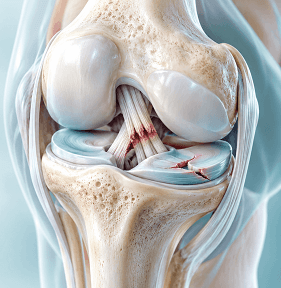
Don't let a sports injury or sudden twist leave your knee unstable. Get an accurate MRI diagnosis and fast-track recovery with advanced keyhole arthroscopic surgery by senior joint preservation specialists at Arihant Hospital, Dehradun.
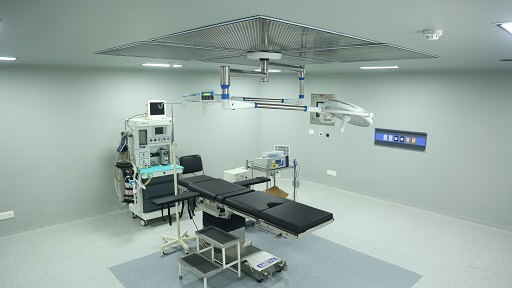
Equipped with high-definition arthroscopy cameras and laminar flow surgical suites.
Are You Experiencing Any of These Knee Symptoms?
Ligament and cartilage injuries disrupt knee joint biomechanics. Select all sensations that apply to your current condition:
Leaving an ACL or meniscus tear untreated leads to recurrent joint giving way, secondary damage to the articular cartilage, and early-onset knee osteoarthritis.
Why You Shouldn't Ignore ACL & Meniscus Injuries
The anterior cruciate ligament (ACL) provides rotational stability, while the meniscus acts as the knee's shock absorber. Damage to either structure alters weight distribution across the joint.
Chronic Joint Instability & Buckling
Continuous episodes of the knee giving way during normal pivoting, putting you at high risk of sudden falls.
Secondary Meniscal & Cartilage Shredding
Unstable bones sliding against each other shear off protective cartilage cushions, creating permanent joint damage.
Premature Post-Traumatic Arthritis
Accelerated wear and tear leading to chronic stiffness, bone spurs, and long-term joint disability at a young age.
Step-by-Step Clinical Care Pathway
Our structured multidisciplinary approach ensures precise diagnosis, meticulous keyhole repair, and dedicated rehabilitation.
Clinical Assessment
Comprehensive physical examination and stability testing (Lachman, pivot shift) by our senior orthopaedic surgeon.
Tract Mapping & Diagnosis
Advanced 3T MRI scan review to map tear severity, concomitant meniscus lesions, and ligament status.
Arthroscopic Closure / Treatment
State-of-the-art keyhole ligament reconstruction and meniscus repair or trimming under laminar flow OT.
Recovery & Follow-Up
Structured physiotherapy protocols and progressive guidance to ensure full functional return to daily life.
Explore Treatment & Recovery Insights
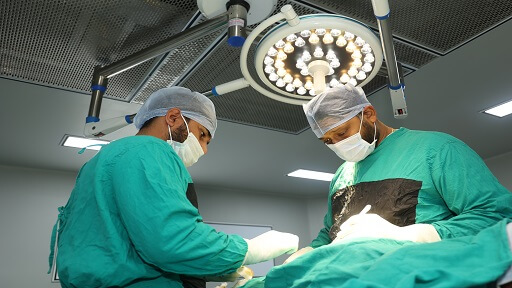
Advanced Arthroscopic Ligament Reconstruction
Keyhole arthroscopic surgery utilizes fiber-optic high-definition cameras and specialized micro-instrumentation inserted through small portal incisions. This allows our surgeons to reconstruct torn ACL fibers using strong autograft or allograft tissues with incredible anatomical precision, sparing the patient large surgical scars and extensive muscle trauma.
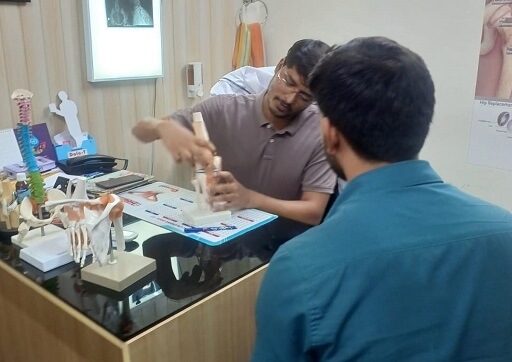
Comprehensive Clinical & MRI Evaluation
Accurate grading of knee trauma is vital. Our diagnostic process combines rigorous manual joint stability testing (such as Lachman and McMurray maneuvers) with high-resolution 3T MRI imaging to determine exact tear morphology, tissue viability, and any associated collateral ligament or cartilage involvement.
Tailored Physiotherapy & Rehabilitation Pathway
Recovery begins immediately after surgery with gentle range-of-motion exercises. Under the supervision of our expert physiotherapists, patients progress through strengthening phases, balance training, and functional sports drills, achieving a safe and robust return to active lifestyles within 6 to 9 months.
The Gold Standard Cure: Keyhole Arthroscopic Reconstruction & Repair
Advanced arthroscopic surgery uses tiny incisions and a high-definition camera system to precisely reconstruct torn ACL grafts and stitch or trim damaged meniscus tissues with minimal trauma.
100% Transparent Financial Coverage
We ensure smooth cashless processing with all government panels and private insurers:
No Private Health Insurance?
Avail 0% Interest Monthly Installments (EMI) with instant paperless verification for both diagnostics and arthroscopic intervention.
Diagnosed with an ACL or Meniscus Tear Elsewhere?
Upload your existing knee MRI scan report or film. Our Senior Orthopaedic Board evaluates scan findings free of charge and provides an unbiased clinical opinion within 2 hours.
Frequently Asked Questions
Can an ACL tear heal without surgery?
Treatment depends on the tear, knee stability, activity goals, and any associated injuries. Some people may be managed without surgery using rehabilitation and activity adjustments; others may discuss reconstruction with an orthopaedic specialist.
What are common signs of an ACL or meniscus injury?
Symptoms can include pain, swelling, reduced movement, a feeling that the knee is unstable, or catching or locking. These symptoms can have different causes, so an assessment is needed to identify the injury.
How are ACL and meniscus tears diagnosed?
Evaluation usually includes a discussion of how the injury happened, a knee examination, and imaging when appropriate. An MRI may help assess ligaments, menisci, and other soft tissues.
Does every meniscus tear require surgery?
No. Management depends on the tear's type and location, symptoms, activity needs, and other knee injuries. A clinician may discuss rehabilitation and monitoring or consider surgery where appropriate.
What is arthroscopic ACL reconstruction?
Arthroscopic ACL reconstruction is a procedure using a small camera and instruments through small incisions to reconstruct the ligament, commonly using a graft. Whether it is suitable depends on an individual orthopaedic assessment.
How long does recovery take after ACL surgery?
Recovery is gradual and varies by person, procedure, associated injuries, and rehabilitation progress. Returning to running or sport requires clinical guidance and meeting functional milestones; your care team can advise on an individual timeline.
When should I seek care after a knee injury?
Arrange assessment for persistent pain, swelling, instability, or difficulty moving the knee after an injury. Seek urgent care for severe pain, major deformity, inability to bear weight, an open wound, or a cold or numb foot.
Are ACL or meniscus scans and procedures covered by insurance?
Coverage depends on your policy or scheme, the care recommended, and any required approvals. Contact your insurer and the hospital insurance desk to confirm eligibility and payment arrangements before planned care.